

 Veselin Stoyanov10 min read
Search Engines Other Than Google: Which Ones Matter in 2026
Explore search engines beyond Google and learn how to reach more users with Bing Webmaster Tools, IndexNow, and AI search readiness.

Search engines other than Google: the short list
Which alternatives deserve your attention depends on your audience and market. Start with these engines and services, then prioritize the ones your analytics show people actually use.
- Bing - A general-purpose search engine and a practical priority for site owners who want coverage beyond Google. It also supplies traditional web results for some other search services.
- DuckDuckGo - Often chosen by people who value privacy. It combines its own crawler and sources with traditional links that are largely sourced from Bing. For site owners, Bing visibility can therefore help with some DuckDuckGo results too.
- Yahoo Search - Relevant if your audience uses Yahoo's portal and search experience. Its traditional algorithmic web results are generated by Bing, so Bing SEO work is a useful starting point. (en-maktoob.help.yahoo.com)
- Brave Search - A privacy-focused option with its own independent search index. It is worth monitoring if your audience prefers privacy-oriented products or if you want to diversify beyond the largest indexes.
- Ecosia - Appeals to people who want their searches to support environmental initiatives. Its results may come from partners such as Bing or Google, depending on factors including location and device, so don't assume it has a single fixed index.
- Yandex - A search engine to consider when serving Russian-speaking audiences or markets where Yandex is used. Its relevance is more regional than universal.
- Baidu - A key consideration for businesses targeting Chinese-language users in China. A site that performs well in the US does not automatically meet the language, market, or technical needs of that audience.
- ChatGPT search and Perplexity - AI answer services that can surface and cite web pages as part of responses. They are not simply another conventional list of blue links, but their referrals and citations may matter if your audience uses them to research.
A practical starting point for most US-focused websites is Bing. Consider the regional engines when you actually serve their audiences, and assess AI answer services as a separate discovery channel rather than assuming they will replace traditional search.
Why other search engines can matter for traffic
A smaller source of visits can still be valuable if those visitors are a good fit for your business. Search engine traffic can also be more diverse than a single dashboard total suggests: a visitor might arrive through Bing, a partner that uses Bing results, or an AI answer that cites a page.
There are three practical reasons to look beyond Google:
- You can reach people who choose a different search experience. Some people prefer privacy-focused tools, others use a default search provider, and some rely on regional platforms.
- One piece of SEO work can support more than one destination. Clear, useful pages and sound crawlability matter across search engines. Bing optimization can also be relevant to services that draw on Bing results.
- You reduce dependence on one discovery channel. This is not a promise that another engine will replace Google traffic. It is a reason to make your site discoverable wherever your audience searches.
Don't treat every alternative as a separate SEO campaign. First confirm that a channel is relevant to your market, then check whether it sends impressions, visits, leads, or sales. A small but well-qualified source may deserve more attention than a larger source that rarely converts.
How to get your site indexed beyond Google
1. Set up Bing Webmaster Tools
Add and verify your site in Bing Webmaster Tools. Submit your XML sitemap so Bing can discover your important URLs, then use URL inspection when a page is missing or you suspect a crawl issue. Check that your sitemap contains the canonical URLs you want indexed, not redirects, duplicates, or pages marked noindex.
Bing's URL submission guidance describes ways to submit URLs and explains how IndexNow fits into the process. Submitting a URL is a discovery signal, not a guarantee that it will be crawled, indexed, or ranked.
2. Make crawling straightforward
Before looking for advanced fixes, check the basics:
- Your important pages return a successful response and can be reached without a login.
- Your
robots.txtfile does not block pages or resources needed to understand your content. - Pages you want indexed do not accidentally contain a
noindexdirective. - Internal links point to useful pages, and your sitemap stays current.
- The page has a clear purpose and adds something useful beyond a thin variation of another URL.
Use Bing Webmaster Tools to inspect pages and look for crawl or index-status issues. Fix what the tools identify, then check the URL again. A sitemap or submission can help discovery, but it does not override a crawl block or make an unsuitable page indexable.
3. Use IndexNow for new and updated pages
IndexNow is a protocol for notifying participating search engines when URLs are added, updated, or removed. It can help them learn about changes sooner than waiting for their next routine discovery. It does not force a search engine to crawl or index a URL, and it does not improve rankings by itself.
For a blog, the practical routine is simple: publish or substantially update a useful page, make sure the URL works and is crawlable, and send a notification for the changed URL. Continue to keep your sitemap and internal links in good shape; IndexNow complements those discovery methods rather than replacing them.
With RankWorker, our IndexNow integration notifies participating search engines when an article publishes. That can make change notification part of the publishing workflow instead of another task to remember. For a more detailed implementation discussion, see our IndexNow for blogs articles.
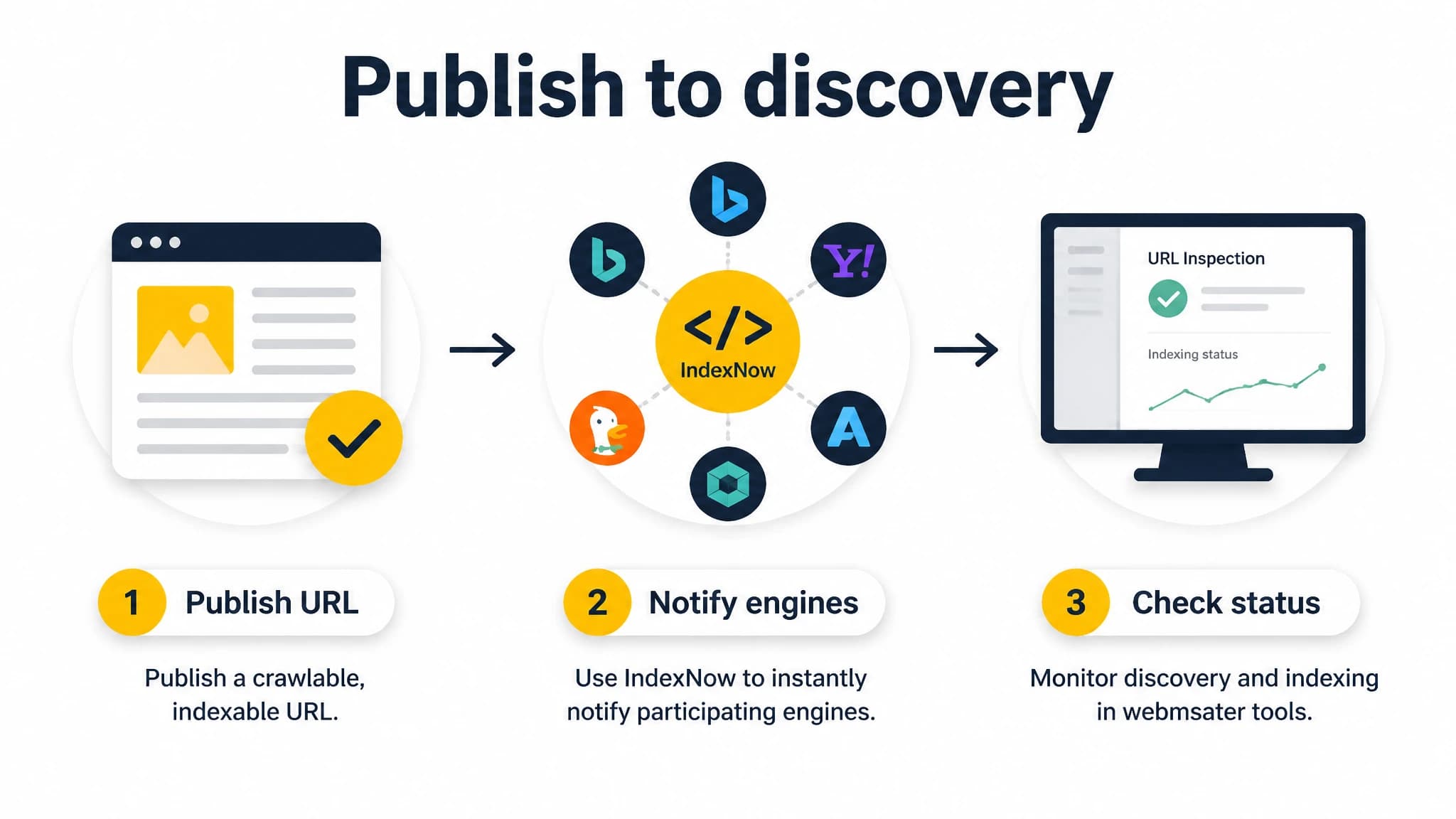
IndexNow supports change notification, while webmaster tools help you monitor discovery.
4. Measure results by engine
Look at impressions, clicks, landing pages, and meaningful conversions separately where your analytics and webmaster tools make that data available. Compare performance over a useful period, and avoid judging a channel from a single day or one newly published page.
If Bing impressions are present but visits are low, review the search appearance and the page's match to the query. If impressions are absent, check discovery, crawlability, index status, and whether the page is relevant to the audience. Use the same kind of diagnosis for other services where they provide reporting. The goal is to find a fixable obstacle, not to assume every missing visit needs more content.
What about AI search engines?
ChatGPT search and Perplexity can provide answers that include links to sources. Being discoverable in these experiences is different from ranking in a traditional search results page, and there is no reliable shortcut that guarantees a citation.
Start with the same foundations you need for search: publish clear, original pages; explain the answer directly; use descriptive headings; and support important claims. Then check your robots rules and server protections so they do not unintentionally block the access you want to allow. Review each service's current publisher guidance before changing crawler permissions, and keep search access separate from any broader decision about model training or data use.
For more ideas on making content easier to understand in AI search, browse our AI search optimization posts. Treat these as an additional discovery consideration, not a reason to abandon useful pages or sound technical SEO.
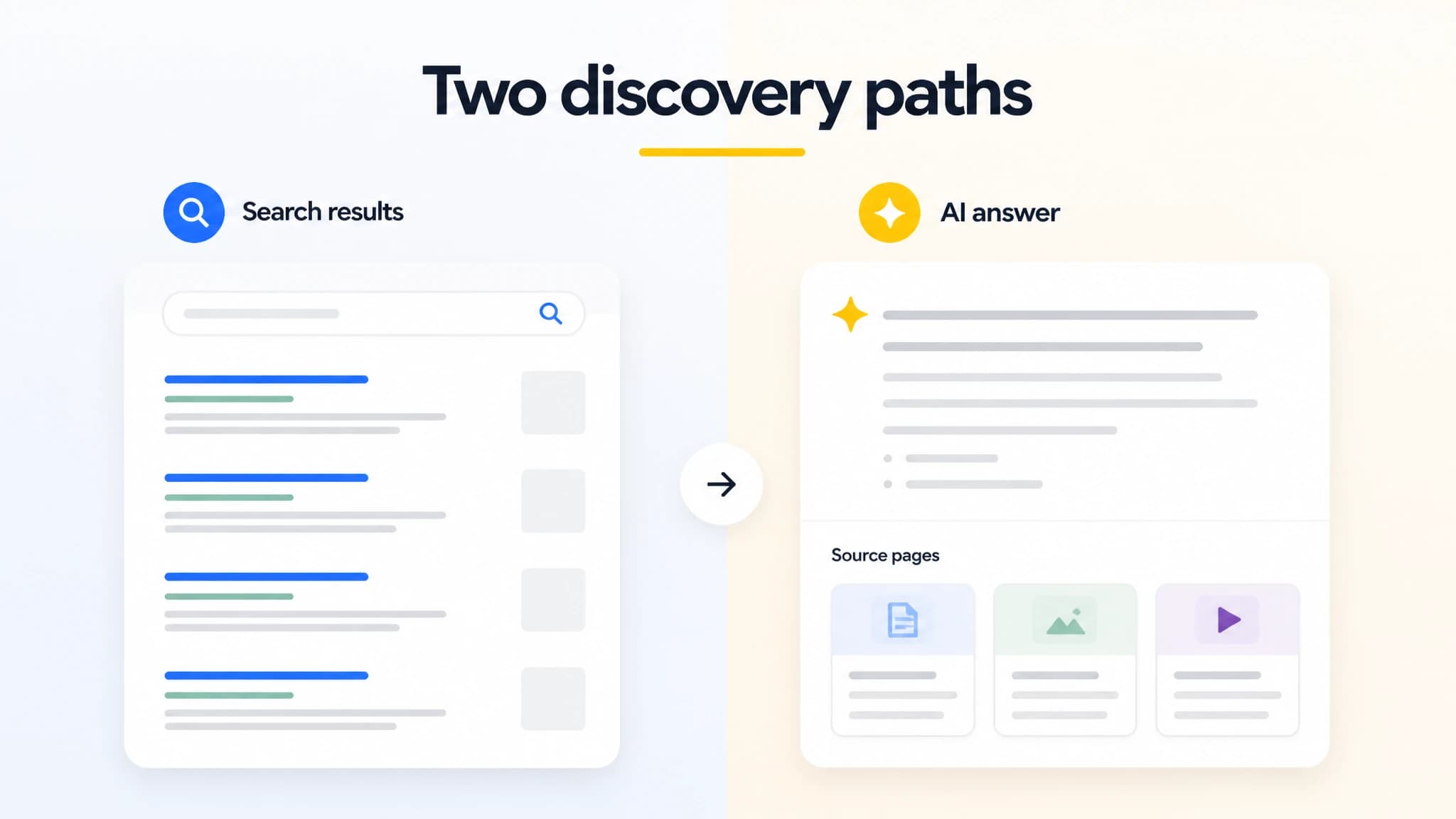
AI answer services can present sources differently from traditional search results.
Which alternatives should you prioritize?
Use this quick decision process:
- Start with your audience. If you primarily serve US customers, begin by checking Bing. If you serve a specific region or language community, research the search services used there before investing in optimization.
- Check your evidence. Review referral traffic, webmaster-tool data, and conversion quality. Don't assume a platform matters to your business just because it is well known.
- Fix shared fundamentals first. Crawlable pages, useful content, accurate metadata, internal links, and a maintained sitemap help build a dependable base.
- Automate repeatable publishing work. A consistent workflow makes it easier to keep pages current and notify search engines about changes. Our SEO workflow articles cover related planning and publishing practices.
- Review and adjust. Revisit the sources that bring qualified visits and spend more time where you see meaningful results.
For busy site owners, the key is not to optimize for every engine equally. Establish a technically sound site, make Bing discoverability part of the routine, and prioritize other search engines or AI answer services when your audience and results support it.
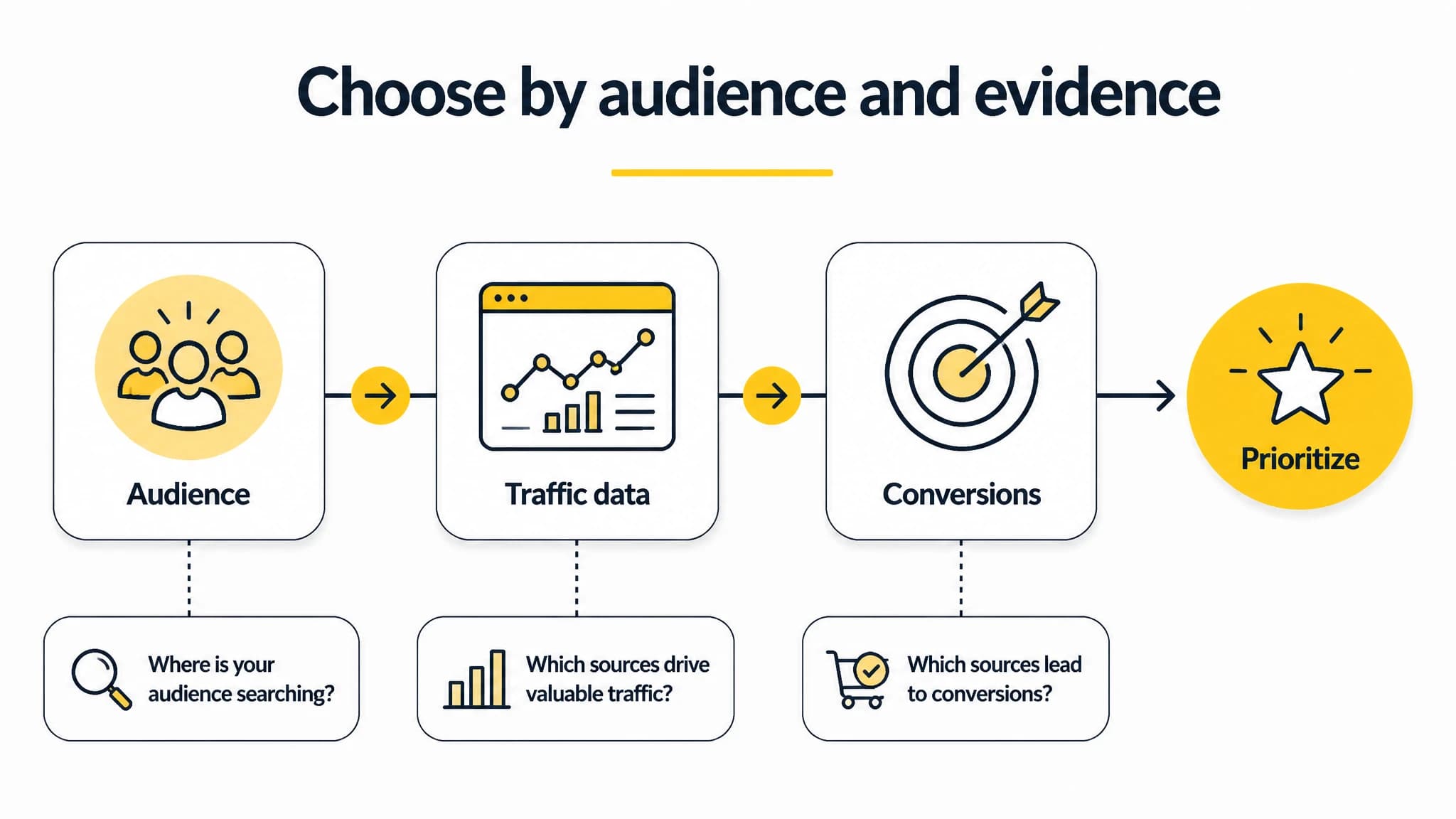
Prioritize discovery channels using audience fit and measured results.
A practical next step
Search engines other than Google matter when they connect your pages with people who are looking for what you offer. For most site owners, the useful first moves are straightforward: verify your site in Bing Webmaster Tools, submit a clean sitemap, check crawlability, and use IndexNow to notify participating engines when content changes. Then measure which sources bring relevant visitors.
We built RankWorker to help make SEO content production and publishing more repeatable. With RankWorker, you can plan and produce articles, schedule publishing, and notify participating search engines through our IndexNow integration. Keep your strategy tied to real audience needs, and treat each new discovery channel as something to measure rather than a guaranteed traffic win.