

 Veselin Stoyanov10 min read
AI Blog Writers: How to Pick One That Writes Posts Worth Ranking
Compare AI blog writers with one shared brief. Check accuracy, originality, voice, structure, and workflow before choosing a tool.

An AI blog writer is worth choosing only if it helps you produce useful, accurate posts that fit your audience and can be published as part of a repeatable process. A fluent draft is not enough: you also need a clear topic, a sound structure, reliable claims, a recognizable brand voice, and the practical pieces that help a post move from idea to published page.
The fairest way to compare tools is to give each one the same article brief, then assess the results against the same quality checks. This guide shows you how to run that test, what to look for in a draft, and why a standalone AI article writer can leave much of the work unfinished.
What an AI blog writer should do
An AI blog writer turns a prompt or brief into a draft. Depending on the tool, you might also get help with outlining, keyword research, editing, images, metadata, or publishing. Those capabilities matter because a blog post is more than its paragraphs.
Before comparing tools, decide what job you actually need done. Are you looking for a first-draft assistant, or do you want help moving from a search opportunity to a review-ready post? Make a short list of must-haves, such as:
- Drafts that address the reader’s search intent.
- Clear structure, useful examples, and a consistent brand voice.
- A practical way to review claims and revise the article.
- Support for related tasks, such as planning, images, metadata, and publishing.
- A workflow that fits your existing website and team.
A tool that writes quickly may still create more work if you have to rebuild the outline, verify every claim, add missing page elements, and transfer the final article by hand. Judge the whole process, not just the time it takes to generate a draft.
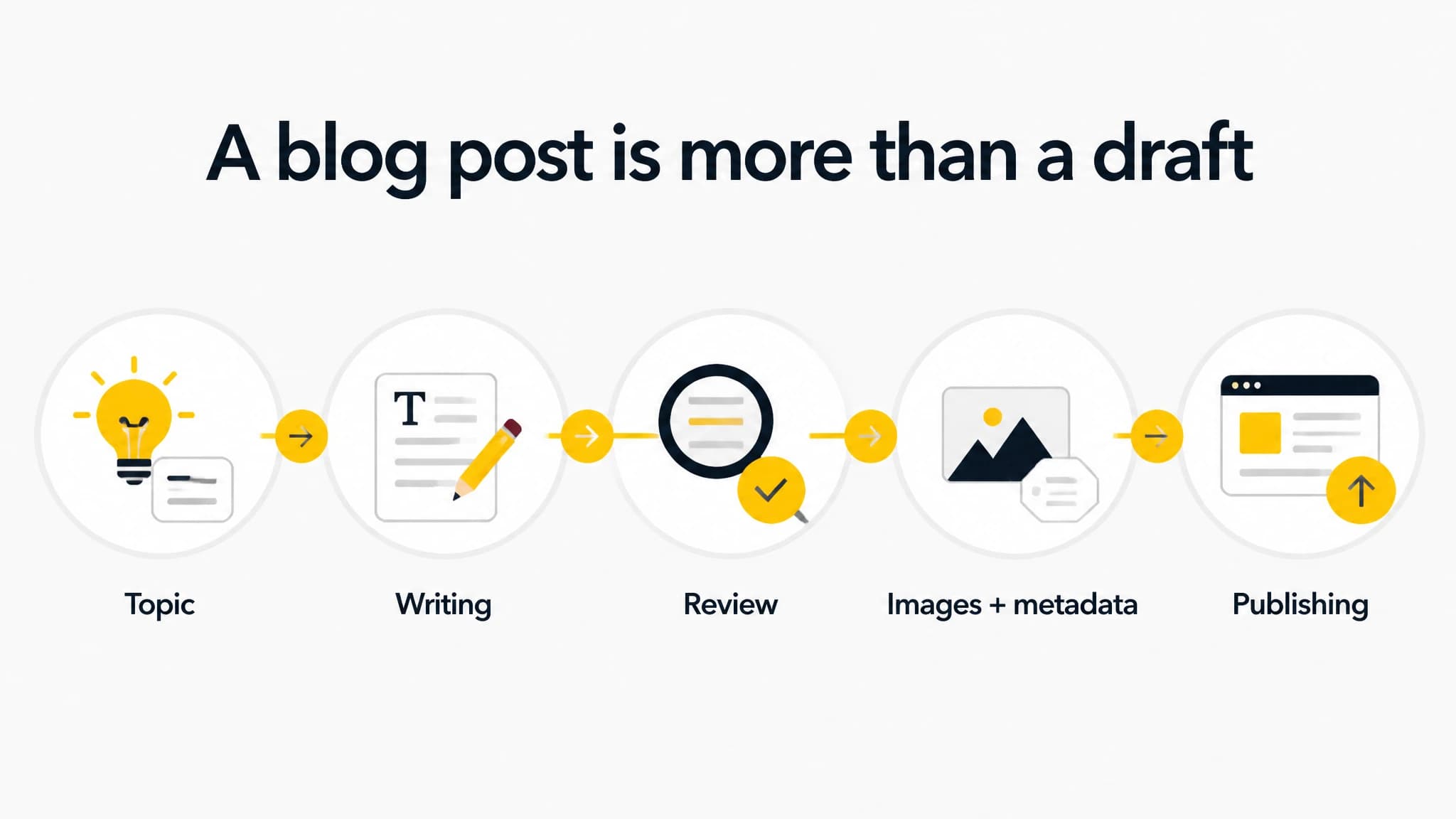
Compare tools across the full path from choosing a topic to publishing.
Run the same test across tools
A hands-on test is more informative than a polished demo. Give each AI blog post writer the same brief and instructions, then compare the drafts without changing the target or giving one tool extra information.
Use a realistic topic that your business could publish. Keep the brief specific enough to guide the work, but not so detailed that you write the article for the tool. For example:
Write a practical blog post for first-time home gardeners choosing a compact herb garden. Explain what to consider, give a simple starting plan, and avoid unsupported claims. Use a helpful, plainspoken tone. Include a title, outline, introduction, and conclusion. The reader should leave knowing what to do next.
For an SEO-focused test, include the target keyword, intended reader, search intent, relevant brand notes, and any verified source material the writer may use. Ask every tool for the same deliverables, such as a title, outline, draft, and suggested metadata. Do not provide sources to one tool and withhold them from another.
Record what happens during the test, not just how the finished article reads. Note whether the tool follows the brief, asks for missing context, invents details, or makes revision straightforward. Save the prompts and drafts so you can compare the results later.
Score the draft with five quality checks
A simple scorecard makes it easier to compare an AI article generator without relying on a vague impression. Rate each category from 1 to 5, where 1 means the draft needs major work and 5 means it is close to your standard. Add a note explaining each score.
1. Accuracy and support
Check names, dates, numbers, instructions, and any claim that could affect a reader’s decision. Treat confident wording as a reason to verify, not as proof. Compare factual statements with the brief and sources you trust. Flag any claim that lacks support or has been presented more strongly than the available evidence allows.
A useful AI blog writer should make review manageable, but you remain responsible for deciding what is accurate enough to publish. If the draft introduces details that were not in your brief, ask where they came from and verify them independently.
2. Originality and reader value
Look beyond whether the wording sounds different. Ask whether the article contributes a useful explanation, example, checklist, or point of view for your reader. Watch for generic introductions, repeated points, padded sections, and familiar advice that could fit any business.
Compare the draft with the sources or examples you supplied. Check that it does not closely echo their wording, blur distinct ideas together, or imply that a source supports something it does not. Editing for originality means improving the substance and usefulness, not just swapping synonyms.
3. Brand voice and audience fit
Read the opening, headings, and conclusion aloud. Do they sound like something your business would say to its customers? Look for unwanted jargon, exaggerated promises, awkward formality, or a tone that does not suit the reader.
Give each tool a short brand guide and see whether it follows it throughout the article. If a draft only matches the voice in the first paragraph, you may spend more time rewriting than the initial output saves.
4. Search intent and structure
Check whether the draft answers the reader’s main question early, then organizes supporting information in a logical order. Headings should help readers scan, not merely repeat variations of the target keyword. Look for practical steps and examples where the subject calls for them.
An article can mention a keyword often and still miss the point of the search. Compare the content with the brief’s intended audience and purpose. If the draft wanders into related but unnecessary topics, remove them or clarify the outline before generating again.
5. Internal links and page readiness
Check whether suggested links genuinely help a reader understand a prerequisite, explore a related subject, or take a useful next step. A list of random links or repeated links to the same page does not make an article better. Confirm every destination and anchor before publishing.
Also check what the writer leaves for you to finish: title, metadata, images, formatting, scheduling, and publishing. A well-written draft may still be a poor fit if the rest of your content workflow remains disconnected.
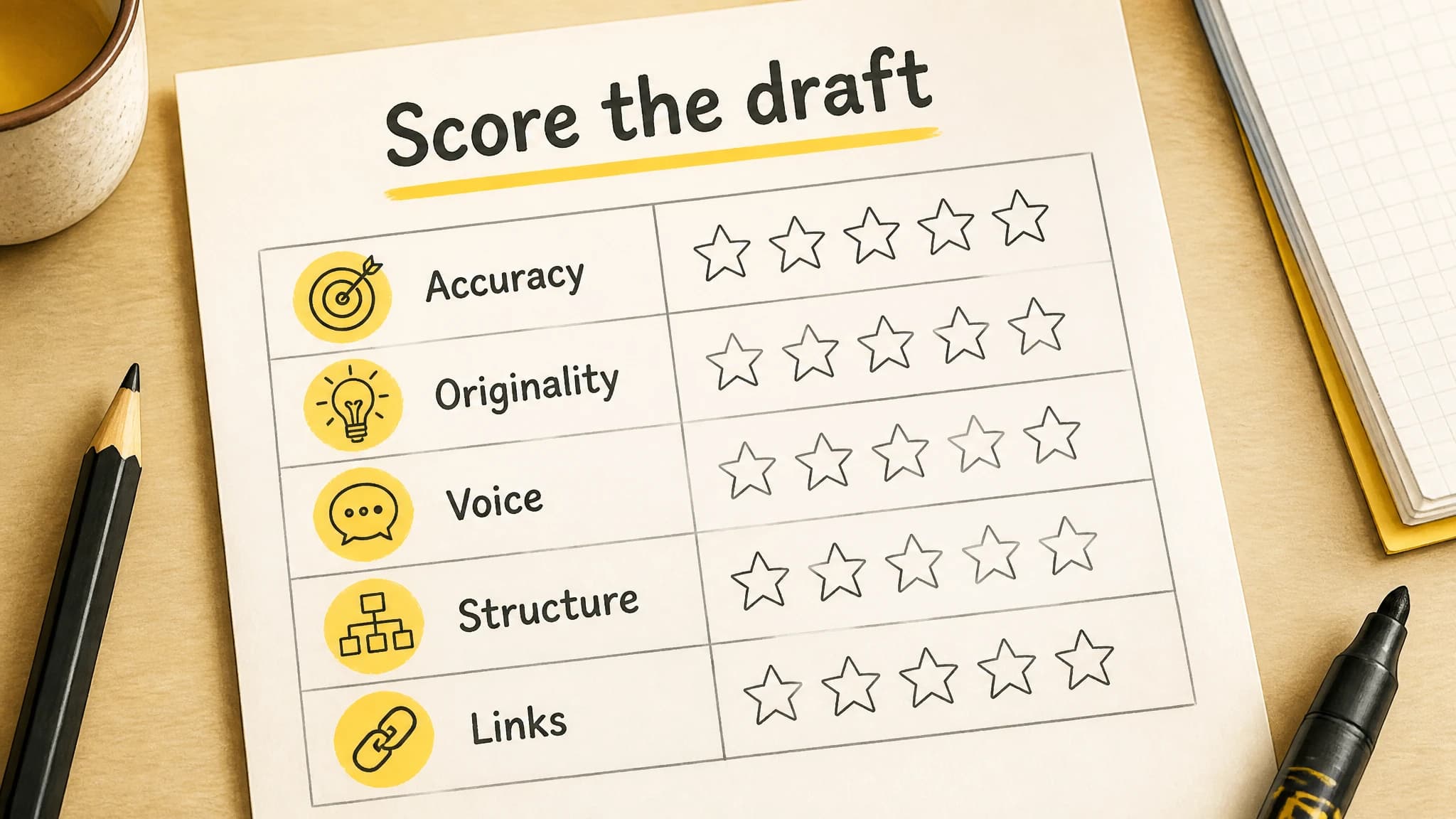
Use the same quality checks to compare each generated draft.
Compare the workflow, not just the writing
Standalone AI writers often focus on generating text. That can be useful, but it does not automatically solve the surrounding work: deciding which keyword to target, finding a worthwhile content opportunity, connecting related articles, creating or selecting images, preparing SEO metadata, and getting the post onto your website.
That gap matters most when you publish regularly. If every article starts in a separate tool and ends with manual copying, formatting, and scheduling, the writing step may be faster while the overall process stays fragmented. Map your current workflow from topic selection to publication, then note which steps each tool genuinely supports.
With RankWorker, we bring together keyword planning, research, content opportunities, clustering, content planning, article generation, article image generation, SEO metadata, scheduling, and automated publishing. Our WordPress, Next.js, Direct API, webhook, IndexNow, and MCP Server options may also be relevant depending on how your site and workflow are set up. Compare those capabilities with your actual needs rather than treating a long feature list as a quality score.
For a closer look at the broader software category, see our guide to SEO content writing tools. If your main concern is review and approval, our AI content approval guidance can help you think through that part of the process.
A practical buying checklist
Before you commit to an AI content writing tool, use your test results to answer these questions:
- Does it meet your quality bar? Compare accuracy, originality, voice, structure, and usefulness across the same brief.
- Can you review it responsibly? Make sure you can identify claims that need checking and revise the draft before it goes live.
- Does it support your full workflow? Look at keyword planning, content organization, images, metadata, and publishing, not only text generation.
- Does it fit your website? Confirm that the available publishing route works with your setup and how your team handles approval.
- Is the output consistent? Test more than one topic if possible. A single strong draft does not show how the tool performs across your real content needs.
- Does it save work overall? Include setup, editing, fact-checking, formatting, and publishing when you estimate the effort.
Do not pick a tool solely because it produces the longest draft or the most polished first paragraph. A shorter draft that follows the brief and needs less corrective work may be more useful. Likewise, broad automation is not a substitute for deciding what your audience needs or reviewing what you publish.
If you want to compare an AI SEO writer with a human review process, use our human review checklist alongside your test. It can help you define what a person should verify before an AI-assisted article is approved.
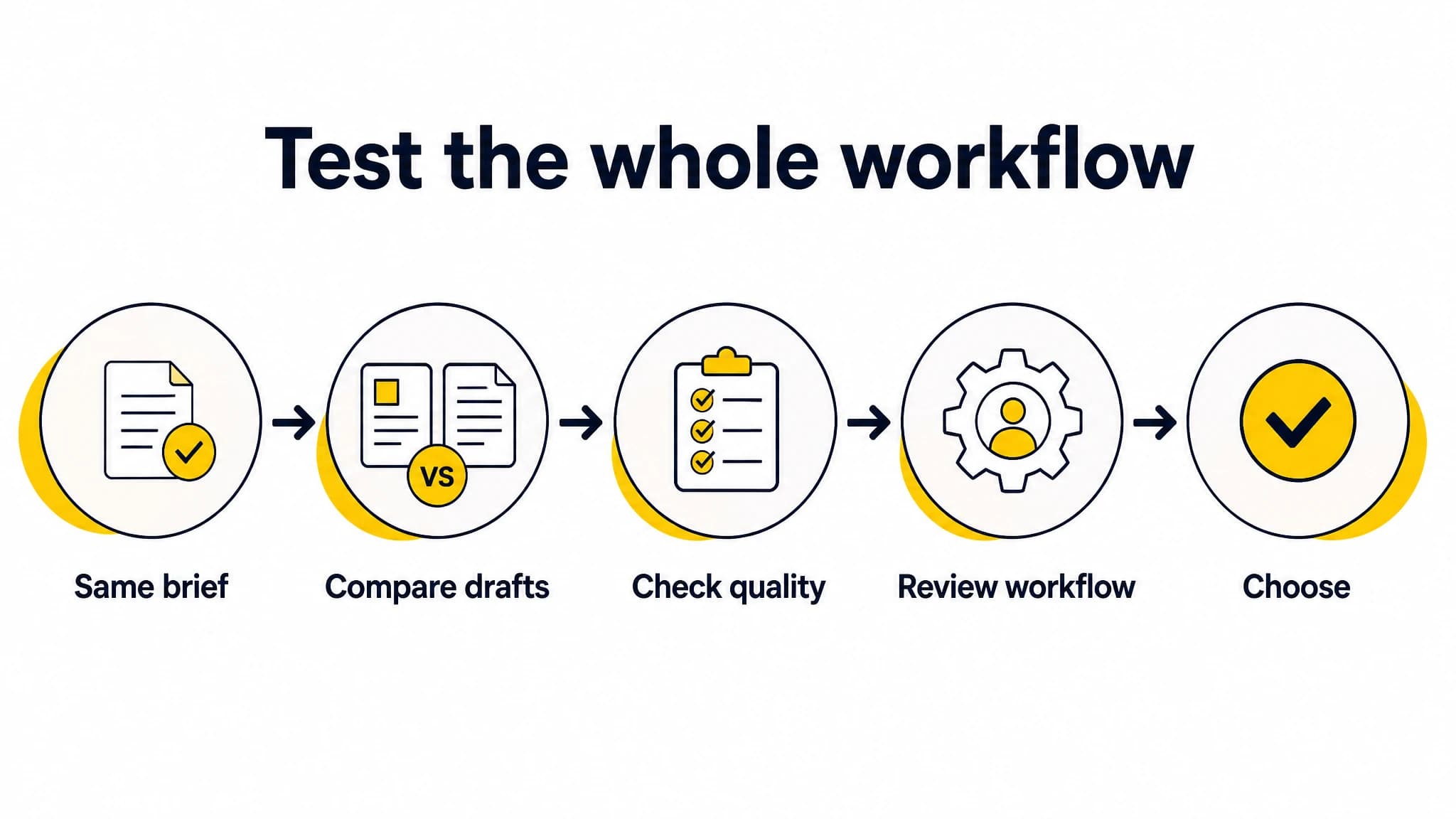
A shared test helps reveal both writing quality and unfinished workflow steps.
Make the decision based on the job
The best AI blog writer for you is the one that consistently helps your team create useful posts while fitting the process around them. Run the same brief through the tools you are considering, score the drafts against clear standards, and check how much work remains before publication.
If you only need help getting a first draft started, a focused writing tool may be enough. If you want to build a repeatable SEO content operation, assess planning, research, clustering, images, metadata, scheduling, and publishing as part of the same decision. With RankWorker, we support that wider workflow so you can spend less time stitching separate steps together and more time reviewing whether each article is right for your audience.